










The 7 biggest mistakes when buying an e-bike in 2026 - and how to avoid them
📌 Summary
The 7 most common mistakes when buying an e-bike are: wrong type, underestimated battery, lack of service, no test ride, unrealistic range, underestimated weight, and lack of warranty. Knowing these mistakes saves money and hassle – and helps you find the perfect e-bike for everyday use.
Introduction
What are the most common mistakes when E-bike purchase 2026 – and how can they be avoided?
The 7 biggest mistakes when buying an e-bike are:
- Choosing the wrong type of e-bike – Anyone who buys a mountain bike for the city is paying for features they never use.
- Underestimating the battery – a replacement battery costs 400–900 €
- Ignore service and repair Without local support, every repair becomes a problem.
- Skip the test drive – Data cannot replace the driving experience
- Believe in unrealistic ranges Manufacturer specifications often deviate significantly from reality.
- Underestimating the weight – every kilogram counts when pushing and carrying
- Accept no warranty or a warranty that is too short E-bikes are complex electronic systems
Those who know and avoid these 7 mistakes will make a better purchase decision – saving real money and enjoying their e-bike more in the long run.
In this guide, we'll show you how to avoid every single mistake – and what really matters when buying an e-bike in 2026.

Mistake 1: Choosing the wrong type of e-bike
📌 At a glance
- The problem: You buy an e-mountain bike or e-road bike, but mainly ride in the city.
- The result: You pay for features you never use – and forgo the convenience you need every day.
- The solution: Analyze your driving profile before buying and choose the right type.
What many buyers do wrong
You see a cool e-mountain bike or a sporty e-road bike – and buy it because it looks good. But then you realize: The bike is actually far too heavy, too uncomfortable, or simply unsuitable for everyday city traffic.
Why this is a problem
City e-bikes, trekking e-bikes, e-mountain bikes, and e-road bikes have been developed for completely different uses. The frame geometry, the suspension, the tires, the riding position – everything is designed for a specific riding style.
Anyone who buys an e-MTB but only rides on paved roads is paying for features they never use – and foregoing comfort they would need every day.

This is how you avoid the mistake
Think carefully before you buy:
- What do you mainly need the e-bike for? Daily commute? Shopping trips in town? Weekend getaways? Long tours?
- Where do you primarily travel? In the city, in the countryside, in the open?
- How often do you go up and down? For many stops, a deep entry ferry is often the better choice.
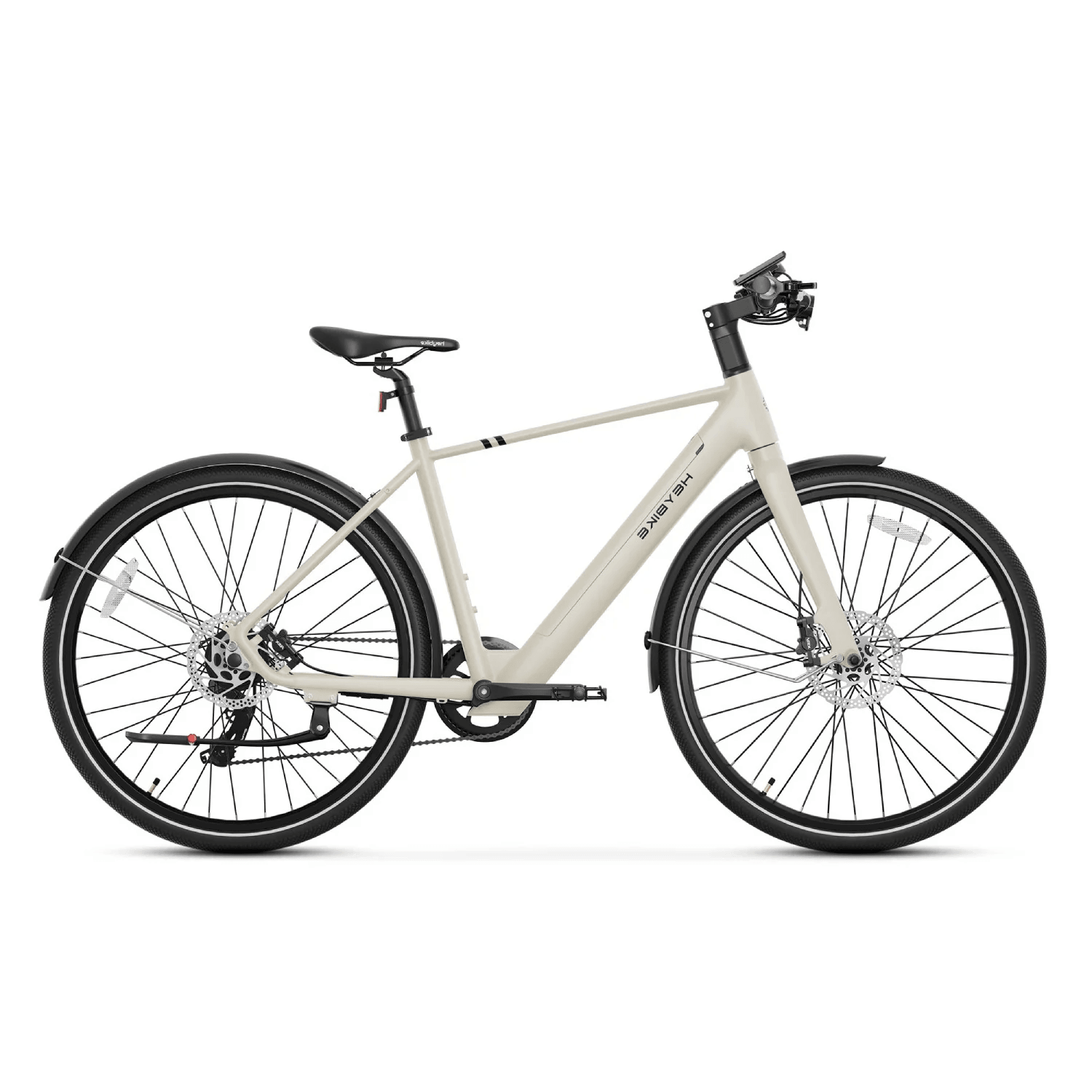
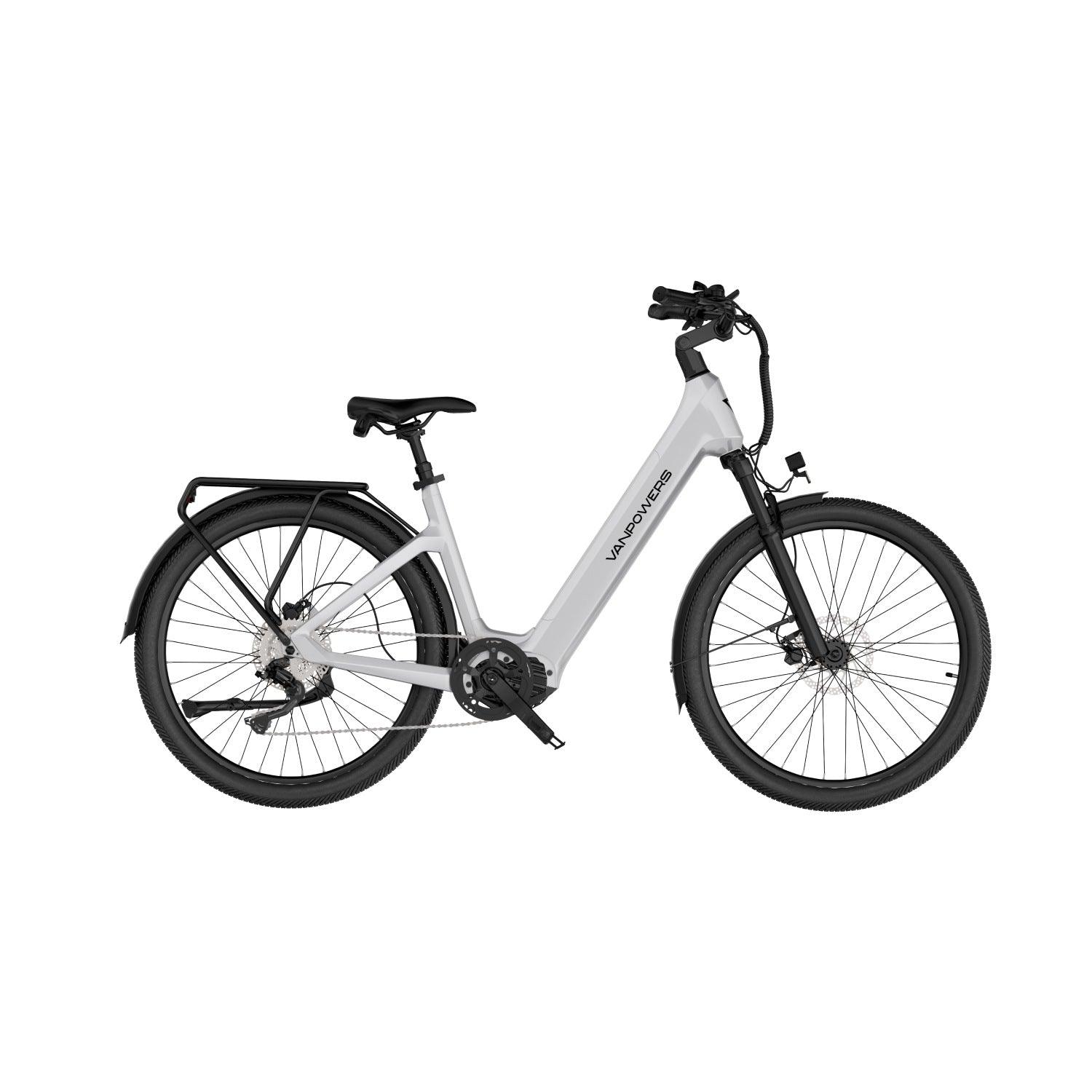
For most city cyclists, a city e-bike or a comfortable trekking e-bike is the right choice. A step-through frame makes getting on and off even easier in hectic city traffic.
💡 Tip from twopoint.store: Here you will find a curated selection of City e-bikes and folding e-bikes – specifically designed for everyday urban life. Our team will be happy to help you choose the right model.
Mistake 2: Underestimating the battery
📌 At a glance
- The problem: They pay attention to price and motor – but not to the battery.
- The result: After 4–7 years the battery is worn out – a replacement costs 400–900 €
- The solution: Compare watt-hours (Wh), check the cell type and the warranty.
What many buyers do wrong
When buying an e-bike, people primarily focus on price, motor power, and design – and forget about the battery. But the battery is the heart of every e-bike.
Why this is a problem
The battery is the most expensive single component of an e-bike. Modern lithium-ion batteries typically last for about... 500 to 1,000 charging cycles, before its capacity noticeably decreases – this corresponds to a service life of approximately four to seven years (Source: Lithium-ion battery manufacturer specifications).
A replacement battery costs between [price range] depending on the brand and capacity. 400 and 900 euros (Source: Market analysis 2026). For high-quality models with large capacity, the price can exceed 1,200 euros.
Those who skimp on the battery risk it: After a few years, the battery will be worn out, and a replacement will either be unaffordable or no longer available.
This is how you avoid the mistake
- Pay attention to the watt-hours (Wh). – not just ampere-hours (Ah). Wh is the more reliable unit of measurement for actual capacity.
- Ask about the battery type. Does the manufacturer use high-quality cells from brands like Samsung or LG?
- Clarify the spare parts supply. Will the battery still be available in 3-5 years?
- Check the warranty conditions. Is the battery covered by the warranty?
💡 Tip from twopoint.store: We offer a discount on all e-bikes. 2-year warranty – including motor and battery. This way you are protected from expensive surprises.

Mistake 3: Ignoring service and repair
📌 At a glance
- The problem: You buy online – but who repairs it when something breaks?
- The result: No bike shop can help, no spare parts are available, the bike will become e-waste.
- The solution: Choose a retailer with German support, local warehouse and warranty.
What many buyers do wrong
You buy a cheap e-bike from a direct seller – and don't think about what happens if something breaks.
Why this is a problem
This is one of the biggest mistakes ever. Many e-bikes are sold in Germany without a significant service network. The vast majority of bike shops and repair shops are unable to handle these brands if a problem goes beyond the mechanical aspects.
A recent experience illustrates what this looks like in practice: After a year, the battery of an e-bike suddenly only showed 100% charge – regardless of how long it was charged. Local help? None. The local bike shop couldn't repair it, and there was no direct contact person in Germany.
This is how you avoid the mistake
- Buy from suppliers with a German branch. Those who are based in Germany are easier to reach.
- Pay attention to local warehousing. This means that spare parts are quickly available.
- Check the customer service. Is there a German hotline? Do they answer in German?
- Ask about the service partners. Are there any workshops that can repair the bike?

💡 Tip from twopoint.store: We are sitting with a German team in Germany – with local warehousing, German-speaking customer service and fast shipping. In case of problems, you have a direct contact person in Germany; no cumbersome communication with manufacturers in the Far East.
Mistake 4: Skipping the test drive
📌 At a glance
- The problem: They order online without ever having ridden the bike.
- The result: Seating position, frame height and motor support are mismatched – frustration is inevitable.
- The solution: Test the bike before buying it – at least 15–20 minutes in real-world conditions.
What many buyers do wrong
They compare prices and data online, read reviews – and then order without ever having ridden the e-bike.
Why this is a problem
Technical specifications are important – but they don't replace the riding experience. Whether the seating position is truly comfortable, whether the frame is the right size, whether the brakes feel good, whether the motor assistance feels natural – you only notice all of that on the bike.
An incorrect frame size will eventually lead to back or wrist pain. An unfamiliar riding position makes every ride strenuous. And jerky motor assistance spoils the fun.

This is how you avoid the mistake
- Arrange a test drive. Even if it takes some effort – it's worth it.
- Test the bike in real-life everyday situations. Drive the routes you plan to drive later.
- Pay attention to: Seating comfort, handlebar height, frame geometry, braking performance, engine response, weight when pushing.
💡 Tip from twopoint.store: Through us you can arrange test rides with our local partners – so you can test your desired e-bike before you decide.
Mistake 5: Believing unrealistic range figures
📌 At a glance
- The problem: They trust the manufacturer's specifications ("up to 100 km")
- The result: In everyday use, you only get 60 km – and then suddenly you're left without a battery.
- The solution: Compare watt-hours (Wh), not kilometers – and plan for a 20–30% reserve.
What many buyers do wrong
They read on the manufacturer's website "range up to 100 km" – and assume that they will achieve this range in everyday use.
Why this is a problem
The manufacturer's specifications are determined under ideal conditions: flat terrain, lightest rider, lowest assistance level, optimal temperatures. Real-world performance is different.
The actual range depends on many factors:
- Driver weight
- terrain (Inclines consume significantly more energy)
- Tire pressure (Too low pressure increases rolling resistance)
- Outside temperature (Cold weather reduces battery performance)
- Support level (Turbo consumes much more fuel than Eco)
- wind (Headwinds are a silent battery killer)
This is how you avoid the mistake
- Compare watt-hours (Wh) – not the mileage figures. In practice, a 500 Wh battery often delivers between 60 and 120 km – depending on conditions (source: market analysis 2026).
- Allow for a buffer. Plan for a 20–30% reserve.
- Base your decisions on realistic tests. instead of manufacturer specifications.
| Battery size | Suitable for | Realistic range (approx.) | Recommended usage time per charge |
|---|---|---|---|
| 400 Wh | Short city commutes, daily commute under 15 km | 40–80 km | 1–2 days |
| 500 Wh | All-rounder, medium to longer distances | 60–120 km | 2–3 days |
| 600+ Wh | Long tours, lots of climbing, frequent riders | 80–150 km | 3–5 days |
Mistake 6: Underestimating the weight
📌 At a glance
- The problem: They pay attention to the motor and battery – but not to the weight.
- The result: Every kilogram becomes a burden when pushing, climbing stairs and loading.
- The solution: Pay attention to the net weight – 18–22 kg is the guideline value for city e-bikes in 2026.
What many buyers do wrong
They pay attention to motor power, range and features – but not to the weight of the e-bike.
Why this is a problem
An e-bike isn't just ridden. It's also pushed, parked, maneuvered, carried to the basement, lifted into the trunk, or taken on the train.
Especially in the city – with bicycle storage rooms, narrow stairwells, elevators and overcrowded bicycle racks – every extra kilogram makes a noticeable difference.
The trend for 2026 is clearly heading towards lighter e-bikes. 18 to 22 kilograms is a good guideline for a city e-bike today (source: industry trend 2026).

This is how you avoid the mistake
- Pay attention to the net weight (excluding accessories such as luggage racks, mudguards).
- Test while pushing, whether you can move the bike well.
- Consider, where you will need to park and transport the bike later.
💡 Tip from twopoint.store: We carry models such as the ADO Air 20S with only 18 kg Weight – perfect for anyone who needs to move and transport their e-bike daily. Also, the
Urtopia Carbon models They impress with their lightweight carbon frame and a weight of approximately 15–19 kg.
Mistake 7: Accepting no warranty or a warranty that is too short
📌 At a glance
- The problem: You're penny-wise and pound-foolish – no or only short warranty coverage
- The result: You pay for defects yourself – and many brands disappear after a few years.
- The solution: Minimum 2-year warranty on the entire bike including motor and battery
What many buyers do wrong
They are saving in the wrong place and buying an e-bike without a proper warranty – or with a warranty that covers hardly anything in the fine print.
Why this is a problem
An e-bike is a complex electronic system – motor, battery, controller, display, sensors. If something breaks, repairs can quickly become expensive.
Many brands disappear from the market after just a few years. Then there are no more spare parts, no updates, no support. The bike essentially becomes e-waste – long before it would have had to show any technical wear and tear.

This is how you avoid the mistake
- Make sure it has at least a 2-year warranty. – ideally, the entire bike including the motor and battery.
- Read the warranty terms and conditions carefully. What is covered? What isn't?
- Check the return policy. Can you return the bike if it doesn't fit?
- Choose a dealer who will remain in the market long-term.
💡 Tip from twopoint.store: We offer a discount on all e-bikes. 2-year warranty – including motor and battery. Join in
30 Days Return policy and Free Shipping in Germany and Austria. This is how you can buy from us risk-free.
Mistake 8: Buying a used e-bike without a professional inspection
📌 At a glance
- The problem: You're buying used – but the battery condition is unclear
- The result: The supposed bargain price turns into a cost trap – 400–900 € for a new battery
- The solution: Buy only from professional retailers, have the battery checked, and demand a warranty.
Used e-bikes sound tempting – 1.500 € instead of 4.000 €. However, the low price can quickly become a cost trap.
The biggest risk: the battery. Without a professional diagnosis, the actual battery condition remains an estimate. While modern batteries can be technically read, this requires the right software and expertise. A replacement battery costs between €400 and €500, depending on the model.900 € (Source: Market analysis 2026).
Other risks: worn bearings (audible as rattling), defective electronics/control (engine does not start) or sensor problems (irregular support).

This is how you avoid the mistake
- Buy only from professional dealers, who technically test and read the battery
- Pay attention to the warranty on the battery and motor. – Reputable providers offer 2 years
- Purchase receipt, frame number and proof of ownership check (theft protection)
- A written purchase agreement complete
Conclusion: Buying an e-bike doesn't have to be a gamble.
Anyone buying an e-bike in 2026 should know and avoid these 8 mistakes.
The 8 mistakes at a glance:
| Mistake | core problem | Solution |
|---|---|---|
| 1. Wrong type | The bike is not suitable for the riding profile. | Analyze driving profile, select suitable type |
| 2.Battery underestimated | High follow-up costs (400–900 €) | Pay attention to the watt-hour rating, check the warranty. |
| 3. Service ignored | No on-site repair options available | Choose a retailer with German support |
| 4. Test drive skipped | Driving experience unknown | Test before buying |
| 5. Unrealistic range | Disappointment in everyday life | Compare watt-hours (Wh), plan in a buffer. |
| 6. Weight underestimated | Cumbersome handling | Lightweight models are preferred |
| 7. No guarantee | High financial risk | Minimum 2-year warranty |
| 8. Buying used goods without inspection | Battery cost trap | Professional inspection, warranty, purchase agreement |
An e-bike is a big investment – but with the right knowledge, it doesn't have to be a risk. Avoiding these 8 mistakes will help you find an e-bike that not only looks good but also performs exceptionally well in everyday use.
Tip for employees: E-bike via JobRad or company bike leasing
Many employers in Germany offer e-bike leasing through providers like JobRad. The monthly rate is from gross salary Deducted – this saves on taxes and social security contributions. Ask your employer about the possibilities!
Also check for local funding opportunities. Some cities offer subsidies for e-bikes – especially cargo bikes or family e-bikes. A quick online search can be worthwhile.
Ready for your new e-bike? Discover our selection now at twopoint.store – with a 2-year warranty, German-speaking support and fast shipping from Germany.
Frequently asked questions about buying an e-bike
Which e-bike brand is the best?
There is no single best brand – it depends on your individual needs. Pay attention to the quality of the components (motor, battery, brakes), warranty conditions, and the availability of service in Germany.
How long does an e-bike battery last?
Modern lithium-ion batteries last approximately 500 to 1,000 charging cycles, before the capacity noticeably decreases – in practice this is approximately four to seven years (Source: Lithium-ion battery manufacturer specifications).
How much does a replacement battery for an e-bike cost?
Depending on the brand and capacity, between 400 and 900 euros (Source: Market analysis 2026).For high-quality models, it can also be over 1,200 euros.
Do I need a test drive?
Yes – absolutely! Technical specifications don't replace the riding experience. Only those who have taken a test ride know whether the seating position, frame size, and motor assistance are truly a good fit.
Which is better: belt or chain?
A carbon belt is quieter, maintenance-free, rust-free, and lasts up to 30,000 km. A chain is cheaper but requires regular maintenance and replacement parts. For everyday city riding, the belt is often the more comfortable choice.
Can I lease my e-bike?
Yes – many employers offer e-bike leasing through providers such as JobRad Yes. This can offer tax advantages. Ask your dealer about the possibilities.
Can I buy a used e-bike?
Yes – but only with caution. Have the battery professionally tested, check the warranty (reputable sellers offer a 2-year warranty on the battery and motor), and request proof of purchase and the frame number. Buying privately without inspection is a high risk.
Note: All technical specifications are based on manufacturer information and general market data (as of 2026). Errors and omissions excepted.


Leave a comment